How Colony Spaces Built A More Reliable Coworking Sales Process
The moment a coworking operator starts missing leads, the sales problem is no longer only about demand. It becomes an operating problem. Messages arrive through WhatsApp, the website, brokers, walk-ins, QR codes, Google Ads, and old contacts. If the team cannot qualify, route, follow up, and learn from those enquiries, revenue leaks before a tour ever happens.
TL;DR
- Colony Spaces moved from manual lead handling to a more structured sales process. Excel and manual WhatsApp follow-up became too fragile as the business grew into a 20-building operator across Mexico City and Cancun.
- HubSpot became the central CRM. Colony tracks leads by location, product interest, source, and time to close so the team can see where demand comes from and how enquiries convert.
- WhatsApp automation helps qualify leads faster. ManyChat collects key details before human follow-up, then sends that information into HubSpot.
- The tour remains a critical sales moment. Technology organizes the journey, but the in-person visit helps uncover what the client actually needs.
- AI works best when inventory data is clean. Colony uses AI through WhatsApp automation to answer availability questions using office capacity, pricing, layout, and building data.
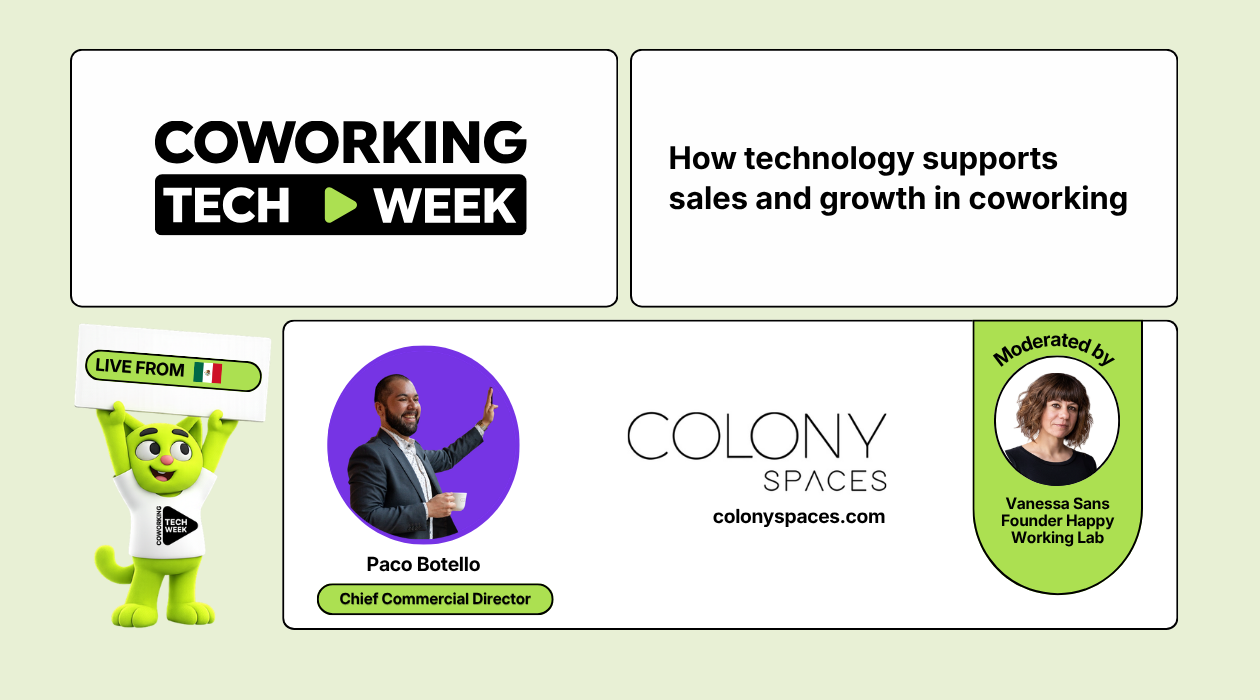
This article is based on the Coworking Tech Week replay, How technology supports sales and growth in coworking, featuring Vanessa Sans of Happy Working Lab and Paco Botello, Commercial Director at Colony Spaces. The replay follows Colony’s move from fragmented lead handling to a more reliable sales process across HubSpot, WhatsApp, ManyChat, broker relationships, retention workflows, and AI-supported inventory management.
Missed leads are an operating problem
Manual sales systems can work when lead volume is low and one or two people know every prospect. They become risky when demand grows, the portfolio expands, and enquiries arrive from several channels at once.
Paco describes Colony’s earlier process as a mix of Excel and manual WhatsApp follow-up. That worked at a smaller scale, but it became harder as the company grew. Leads could be missed, response times were inconsistent, and the team lacked clear visibility into where demand was coming from.
This is where sales becomes part of the coworking technology stack. A CRM is not only an admin tool. It becomes the place where the operator learns which locations attract interest, which products are moving, how long conversion takes, and where follow-up breaks down.
Colony Spaces' growth changed the sales job
Colony Spaces has grown from a local coworking brand into a 20-building flexible workspace operator across Mexico City and Cancun. As the business grew, the customer profile changed too.
In the earlier stage, Colony mainly served smaller local businesses and teams. Today, more demand comes from larger companies, international brands, and broker-led corporate enquiries. That shift makes the sales process more complex. The team has to manage more locations, more products, more stakeholders, and more follow-up.
For a founder scaling from small locations to corporate clients, this is a familiar pattern. The first sales process is often based on speed, personal memory, and direct messaging. The next one needs structure.
Why the CRM became the center
HubSpot became the central CRM for Colony’s sales process. The team tracks leads by location of interest, product interest, source, and time to close.
That visibility lets Colony answer more useful questions. Which buildings are generating demand? Which products are attracting enquiries? Which sources produce leads that actually convert? How quickly does the team respond? How long does it take to move from first contact to tour, proposal, and close?
Those questions are basic, but many coworking teams cannot answer them reliably while working from spreadsheets, inboxes, and scattered chat threads. A more reliable sales process starts when the operator can see the pipeline clearly.
WhatsApp is a sales channel, not just a chat app
In Colony’s market, WhatsApp is one of the most important sales channels. That does not mean every message should be handled manually.
Colony uses ManyChat to qualify WhatsApp leads before they reach the sales team. The bot collects information such as email, phone number, number of desks, preferred area, and product interest, then sends the data into HubSpot. Paco notes that automation becomes especially useful once a team receives around 20 to 25 enquiries per day.
The point is not to remove the human sales role. It is to make sure the human follow-up starts with the right context. Colony aims for human follow-up within two hours after the bot qualifies a lead, which keeps the process responsive without making the team repeat the same intake questions all day.
The tour still does the hard work
Technology can organize the sales journey, but the tour remains one of Colony’s most important conversion moments.
Paco explains that getting prospects into the space helps the team uncover what the client actually needs. A company may enquire about one location but be better suited to another. They may ask for one product but need a different office setup. They may describe a simple requirement, then reveal more during the visit.
This is a useful reminder for any operator working on coworking best practices with technology. Automation should improve the path to the real sales conversation. It should not make the operator less curious about the buyer.
Retention starts after the sale
Colony’s process does not stop at conversion. The company has built a customer experience function for post-move-in support, check-ins during the contract, and renewal conversations before the agreement ends.
The team also collects feedback from new clients to understand why they chose Colony. Was it price, response time, the building, the sales representative, location, or another factor? That information helps the business improve both sales and operations.
Exit management is also segmented. If a client leaves because of relocation, downsizing, home office, payment issues, or another reason, the follow-up should change. Former clients can still become future clients, referral sources, broker connections, or positive advocates if the relationship is handled well.
A sales workflow checklist
Vanessa’s contribution in the session is especially important: operators should map the customer journey before choosing tools. Technology works better when the business knows how leads arrive, how they are qualified, how tours are booked, how clients are onboarded, how renewals are handled, and how exits are managed.
We would turn the Colony session into this checklist:
- Capture every lead source clearly: website, WhatsApp, Google Ads, walk-ins, QR codes, brokers, and referrals.
- Qualify leads before human follow-up where volume justifies it.
- Push structured lead data into the CRM automatically.
- Track location interest, product interest, source, response time, conversion time, and close outcome.
- Treat the tour as discovery, not only presentation.
- Build automated follow-up for toured-but-not-converted prospects, old enquiries, and brokers.
- Start retention with onboarding, check-ins, renewal timing, and feedback.
- Keep office inventory data clean before using AI to answer availability, capacity, price, layout, or building questions.
The strongest lesson from Colony is that technology should support the real sales journey. HubSpot, WhatsApp, ManyChat, automation, and AI-assisted inventory management are useful because they reduce missed opportunities and give the team better information at the right moment.
Watch the full Coworking Tech Week replay with Paco Botello and Vanessa Sans for the complete discussion on Colony Spaces, HubSpot, WhatsApp automation, broker relationships, tours, retention, and AI-supported sales workflows.

Written by
Dimitar InchevCo-Founder & CTO at Coworkies
Dimitar Inchev is Co-Founder and CTO at Coworkies, writing about coworking technology, operations, community building, and workspace growth.